
Optimize Spine Implant Technology
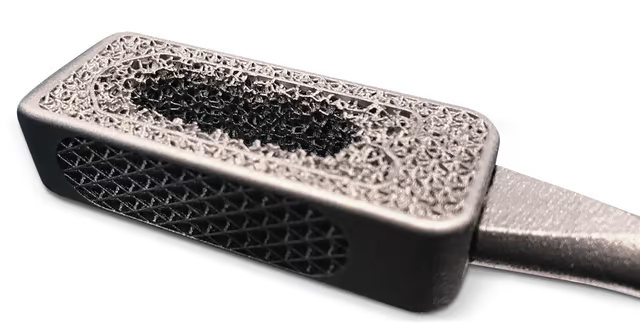
Fast forward to today, NuVasive is a spine leader in AM with a fully 3D-printed family of FDA-cleared spine implants on the market. The Modulus line is the result of thoughtful design, and balances the benefits of porosity and performance requirements of interbody fusion devices.
In the end, it took NuVasive roughly 14 months to go from concept to commercialization with its Modulus product line. Although this is a fairly standard timeline for traditional manufacturing processes, the company was excited that it was able to maintain the same pacing in its first application of AM.
“It is a significant undertaking to build your production process in addition to designing and building your product,” Malik said. “We were proud we had the ability to develop both, and relied on 3D Systems to help build out our datasets and justifications in order to get us to market.”
As to product manufacturing and deployment, 3D Systems provides supply chain flexibility and fulfills volume production orders internally or through certified partners, as well as helps customers transition to additive production at their own facilities through knowledge and technology transfer.
NuVasive is beginning to do its own titanium 3D printing in-house, and is using DMP technology for R&D prototyping, as well as to better understand how the machines work to continue refining its production process.
“It’s been a huge improvement for us to have that capability on site,” Malik said. “Now we have a legitimate, scalable manufacturing process and the ability for continuous improvement in the future.”
This content originally appeared in BONEZONE®, bonezonepub.com.